

Courses
Courses List:
Duration : 1 Year, Study Mode : Distance Learning, Clinical training at Sanjivani Wellness Center , Bhilai, Application Fees: Rs. 500, Course Fee : Rs. 30, 000.00
Duration : 1 Year, Study Mode : Distance Learning, Clinical training at Sanjivani Wellness Center , Bhilai, Application Fees: Rs. 500, Course Fee : Rs. 20, 000.00
Duration : 1 Year, Study Mode : Distance Learning, Clinical training at Sanjivani Wellness Center , Bhilai, Application Fees: Rs. 500, Course Fee : Rs. 40, 000.00
One-Year Distance Learning Program in Ayurveda
Program Overview
The One-Year Distance Learning Program in Ayurveda offered by Ayush Academy of Medical Sciences (AAMS), India is a structured foundational course designed to introduce learners to the classical principles of Ayurveda, integrated with modern concepts of health, lifestyle, and preventive medicine.
This program is ideal for international and Indian students, healthcare professionals, wellness practitioners, yoga teachers, researchers, and individuals seeking an authentic and systematic understanding of Ayurveda through flexible online learning.
Program Highlights
Program Duration & Mode
Eligibility
Course Structure & Curriculum
-
Quarter I (Months 1–3)
-
Module 1
Foundations of Human Health -
- Dimensions of Human Health
- Concept of Well-being in Ayurveda
- Determinants of Human Health
- Life Cycle and Health
- Environmental Pollution and Health
- Ayurveda, Yoga, Aesthetics & Natural Medicine
-
Quarter II (Months 4–6)
-
Module 2
Ayurveda Basics & Philosophy -
- Microcosm–Macrocosm Continuum
- Theory of Panchamahabhuta
- Origin of Universe (Ayurvedic view)
- Triguna Theory: Sattva, Rajas, Tamas
- Tridosha: Vata, Pitta, Kapha
- Swabhava–Paramvada
- Dosha–Dhatu–Mala–Srotas
- Agni, Ama & Ojas
- Causes and Classification of Disease
- Shad Kriya Kala (Stages of Disease Development)
-
Quarter III (Months 7–9)
-
Module 3
Ayurvedic Assessment & Diagnostics -
- Assessment of Human Prakriti
- Dosha Typing & Genetic Predisposition
- Rogi Pariksha (Patient Examination)
- Roga Pariksha (Disease Examination)
- Dashavidha & Ashtavidha Pariksha
- Nadi Pariksha (Pulse Examination)
- Introduction to Nadi Scan (Conceptual)
-
Quarter IV (Months 10–12)
-
Module 4
Healing, Panchakarma & Wellness -
- Food, Lifestyle & Health Balance
- Tridosha Balance & Therapeutic Principles
- Samanya–Vishesha Siddhanta
- Concept of Ama & Digestive Health
- Root Cause of Disease
- Auto-immunity from Ayurvedic Perspective
- Role of Agni in Health & Disease
- Ayurvedic Detoxification & Rejuvenation
- Panchakarma: Principles & Overview, Vamana, Virechana, Basti, Nasya, Raktamokshan
Quarter I (Months 1–3)
Module 1: Foundations of Human Health
Key Topics:
Outcome:
Understanding health as a holistic, preventive, and lifestyle-based concept.
Quarter II (Months 4–6)
Module 2: Ayurveda Basics & Philosophy
Key Topics:
Outcome:
Strong conceptual foundation in Ayurvedic physiology and pathology.
Quarter III (Months 7–9)
Module 3: Ayurvedic Assessment & Diagnostics
Key Topics:
Outcome:
Ability to understand Ayurvedic diagnostic thinking and clinical assessment principles.
Quarter IV (Months 10–12)
Module 4: Healing, Panchakarma & Wellness
Key Topics:
Outcome:
Practical understanding of Ayurvedic healing, detoxification, and wellness strategies.
Quarterly Outcomes
Assessment & Evaluation
Certification
On successful completion, participants will receive:
Certificate in Foundations of Ayurveda & Holistic Health
Issued by Ayush Academy of Medical Sciences (AAMS), India
Career & Academic Relevance
This program is beneficial for:
Faculty
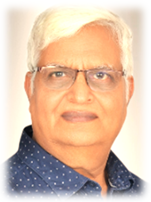
Dr. Mukesh D. Jain
Senior Ayurvedic Physician | Academician | Researcher
Dr. Mukesh D. Jain is a distinguished Ayurvedic physician, academician, and researcher with over three decades of experience in clinical practice, teaching, and research in Ayurveda. He has received formal education in basic sciences, Ayurveda, and modern medical sciences, enabling an integrative approach to healthcare. His areas of specialization include Panchakarma therapy, Rasayana medicine, and Yoga-based integrative healthcare, with special emphasis on chronic, neurological, and neuromuscular disorders. His scholarly work has been presented at national and international scientific forums, and he is the author of several authoritative books and articles on Ayurveda and Yoga therapy. At the Ayush Academy of Medical Sciences (India), Dr. Jain plays a vital role in strengthening Ayurvedic medical education, clinical research orientation, and ethical patient-centred care, in alignment with the vision and objectives of the institution.
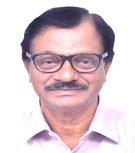
Dr. K V S Rao
Educator in Guru-Shishya Parampara
Dr. K V S Rao is a senior Ayurvedic educator and clinical trainer specializing in Kshar Sutra Therapy for anorectal disorders. He is closely associated with Rashtriya Ayurveda Vidyapeeth, an autonomous body under the Ayush Ministry, where he serves as a recognized Guru in the traditional Guru-Shishya Parampara.Through his involvement with AAMS India, Dr. Rao is dedicated to preserving and advancing authentic Ayurvedic education. He integrates structured academic learning with intensive hands-on clinical training at the National Academy of Ayurveda, empowering young practitioners with classical knowledge and practical expertise in specialized therapies like Kshar Sutra.
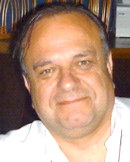
Dr. Ivan Szalkai
Leading authority in Ayurvedic education
Dr. Iván Szalkai is a prominent expert in Ayurvedic education in Hungary. He has been leading the postgraduate Ayurveda programme at the University of Miskolc, Faculty of Health Sciences, since 2007 and holds the title of Honorary Associate Professor (since 2020). Through active collaboration with Ayush Samiti and Ayush Academy of Medical Sciences (AAMS), India, he spearheads initiatives aimed at advancing authentic Ayurvedic education and fostering its scientific integration with contemporary medical research in Europe. He also serves as the Head of the Oriental Medical Centre (IHOC Ltd.).
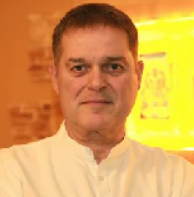
In 2018, I got in contact with Dr. Mukesh D. Jain, an Ayurvedic Ācārya, who welcomed me into his personal and professional sphere and accepted me among his students. I received direct instruction from him in Ayurveda and practical guidance in panchakarma procedures. Through his expertise, I gained a deeper and more integrated understanding of the Ayurvedic system. His influence endures to this day, as we remain in contact across different parts of the world. The knowledge I acquired through this mentorship inspired me to explore Ayurveda at its deepest levels, leading me to conduct extensive research in the field. My overarching goal is to demonstrate both the immense potential of Ayurveda and its necessity within the global discourse on healthcare solutions.

I completed two diplomas in Clinical Ayurveda with Dr. Mukesh D. Jain, Course Director of AAMS India. My learning experience was truly phenomenal. Dr. Jain has a remarkable ability to explain Ayurvedic concepts with exceptional clarity, making even the most complex clinical topics easy to understand and apply. The highlight of the program was the one-month in-person training with Dr. Mukesh, where we gained extensive hands-on experience. This included preparing herbal potlis for massage, performing Shirodhara, learning various herbal treatments, conducting intake assessments, assisting in Panchkarma procedures, practicing Yoga and meditation, and much more. It was an incredible experience that brought all the theoretical knowledge to life. I am deeply grateful to Dr. Mukesh D. Jain Sir for his invaluable guidance and for generously sharing his profound Ayurvedic knowledge.